.png)
There are cities that wear their history quietly, and then there is Berlin — a place where history follows you like a second shadow. As a queer woman living here, I’ve learned that this city doesn’t just give you freedom; it hands you its complexities too. It asks you to witness its past, to sit with its contradictions, to understand that liberation and danger often walk side by side.
Some nights, walking through Schöneberg feels like walking inside a memory that isn’t mine — a whisper of the Weimar years, Hirschfeld’s Institute, the first movements toward self-determination. Other nights, especially after reading the new hate-crime statistics, that same walk feels like a quiet negotiation with the present.
Berlin doesn’t hide the truth from you. It hands it to you directly, the same way it hands you its winters, its politics, its beauty.
And still, somehow, it welcomes you.
One of the first things I learned as an expat is that Germany takes its legal architecture seriously — and when it comes to LGBTQ+ rights, the country’s commitment is astonishingly comprehensive.
The General Act on Equal Treatment protects sexual identity across employment, housing, healthcare, and daily life. It’s one of the strongest anti-discrimination laws in Europe, written broadly enough to include transgender and intersex people even when the language wasn’t perfect. Hate speech, hate crimes, and discrimination are explicitly prohibited.
And then came the shift that changed everything — the Selbstbestimmungsgesetz, Germany’s gender self-determination law.
For the first time, adults could change their legal gender through self-declaration — no psychiatric interrogation, no medical gatekeeping, no humiliating state-sanctioned scrutiny. A simple administrative process, a three-month notice, and the law finally reflected the autonomy people had always deserved.
As a queer woman with trans friends, I watched them exhale. I watched Germany stitch dignity back into a system that had once removed it thread by thread.
Same-sex marriage has been legal since 2017. Adoption rights are equal. And for expats, Germany goes one step further: two foreigners can marry here, even as tourists, free from the bureaucratic hostility many face back home.
The law recognizes love long before society always does.
And yet, the contrast is brutal:
Even with world-class legal protections, Germany’s hate-crime numbers are still too high, when they shouldn’t even exist.
It’s strange how safety can be both deeply present and deeply fragile in the same breath. Germany recorded a 50% rise in politically motivated anti-LGBTQ+ offenses in a single year. Berlin alone saw 588 offenses in 2023, including 127 violent attacks — the highest in the country.
When I walk home from a bar in Schöneberg at midnight, I feel those numbers sitting beside me, not frightening me but reminding me that vigilance is now part of queer adulthood.
But this city does something unexpected: it answers violence with structure, not silence.
Groups like MANEO, LesMigraS, and Schwulenberatung Berlin have woven themselves into the city’s fabric so tightly that they feel like part of the architecture. They collect data the state misses. They go where police reports don’t. They show up for people who arrive here with nothing but a train ticket and a sense of need. They keep people alive.
And for many queer refugees, Berlin does even more — it allows them to stay, refusing to shuffle them across federal states into places where safety isn’t guaranteed. It holds them close.
If you ever need them, you won’t need to search long. Their names appear in conversations the way street names do — ordinary, familiar, trusted.
Even with the legal harmony Germany has built, queer expats still learn the same lesson every newcomer does: rights are not the same as safety.
Some days, Berlin feels almost too free — drag performers smoking outside Spätis at 5am, couples kissing in U-Bahn stations, queer students debating Judith Butler on the U8. Other days, especially in the news cycle, reality intrudes.
I remember the first time a friend told me she was followed home after a Pride event. She said it softly, as if saying it too loudly would make it worse. We sat together on a bench near Kottbusser Tor — her shaking, me furious with the quiet way cities can shift beneath your feet.
But then I watched how Berlin held her:
- MANEO followed up within hours.
- Her therapist through Lesbenberatung shifted an appointment for crisis care.
- A multilingual counselor offered support for reporting — or not reporting — depending on what she chose.
Berlin doesn’t erase risk. It builds nets beneath it. But you should always know the basics.
When I first arrived, everyone told me to go to Schöneberg. “It's the heart," they said. They weren’t wrong.
Walking through Motzstraße feels like touching a living fossil of queer culture — bars, cafés, drag venues, jazz clubs, cruising spaces, cabaret echoes. It’s where Isherwood wrote, where liberation took shape, where people still return when they need community to feel close, not theoretical.
Where activism lives. Where refugees find their first chosen family. Where the political and the emotional blend into something louder than fear.
Home to some of the city’s most important queer housing projects. A reminder that safety isn’t just emotional; it’s architectural.
Where nightlife becomes ritual, where resilience is danced into the morning light.
Part archive, part temple, part inheritance. History is tender there. It teaches you that the struggle did not begin with you — and will not end with you either.
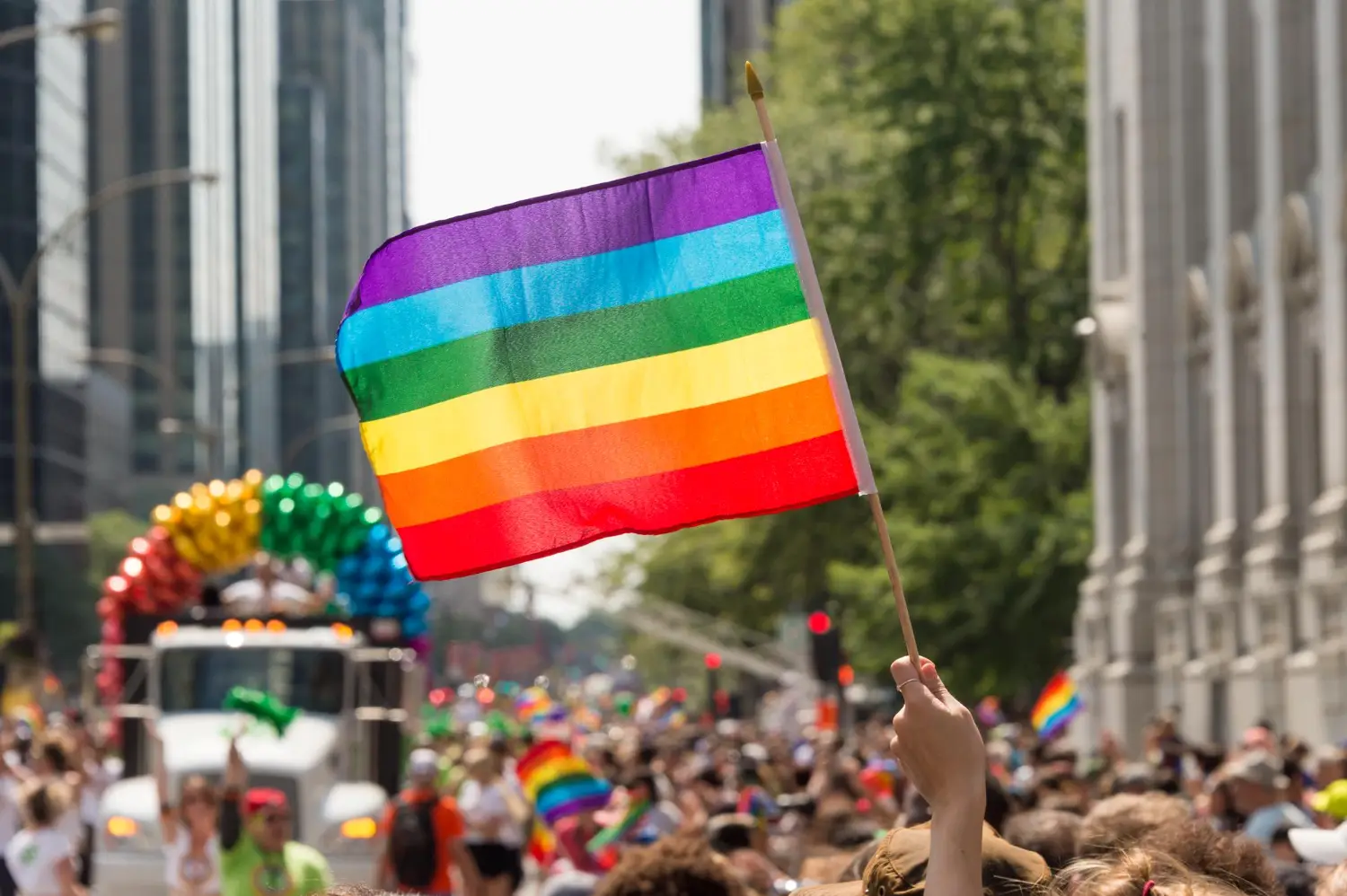
And then there is Christopher Street Day — Berlin Pride — a parade that feels less like an event and more like a refusal. Hundreds of thousands in the streets, insisting on joy as political currency.
Berlin marches like it means it. Because it does.
What I love most about Berlin isn’t its clubs or its laws. It’s the way the city builds structures of care that feel almost quietly revolutionary.
A labyrinth of services: addiction counseling, HIV support, legal advice, refugee assistance, trans* and inter* guidance, multilingual sessions. They see the whole person, not just the problem.
Where trauma is treated gently, where intersectionality isn’t theory but daily practice. Where women, nonbinary people, trans people, migrants, and refugees can say the truth without shrinking.
Political, practical, protective. The kind of organization that makes a city safer simply by existing.
Queer people of color find space here that is culturally intelligent, linguistically aware, and deeply necessary.
A home for Russian-speaking queer people, resisting isolation with community.
These are not accessories to queer life in Berlin. They are the backbone.
And when I walk through the city — through Schöneberg, through Kreuzberg, through Neukölln — I feel them everywhere, like the city’s heartbeat.
Here’s what I would tell you if we met at a café on Oranienstraße, hands warming around mismatched cups of tea:
Berlin will welcome you. But you must learn its language of vigilance.
Not German — the emotional one. The one that will still go to the flea markets and take photos at the square.
Be visible, but aware.
Be open, but discerning.
Know where to go when life breaks, and where to go when life begins again.
Berlin is not always an easy home.
But it is a real one.
For more relevant and touching content, keep coming back to Expats Magazine.
Subscribe to our newsletter for the latest news, exclusive insights.

Find us in social media or contact us through email and we’ll get back to you as soon as possible.


Whether you're moving or settling in Germany, A4ord.de ensures trusted experts are just a click away.


.jpg)