.png)
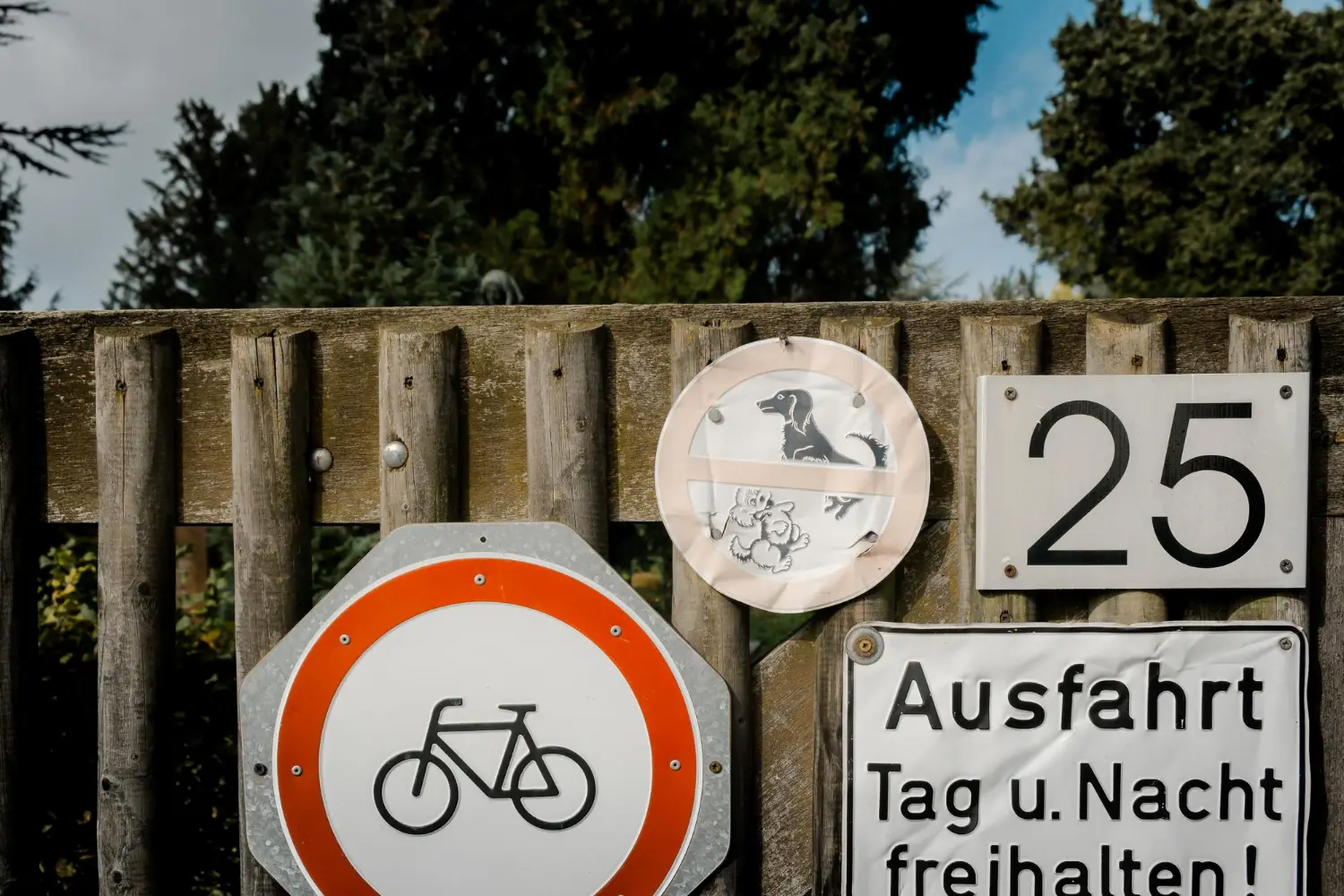
The morning I first drove in Germany, Berlin mist floating low over the streets, I couldn’t stop thinking about home. You grow up in Jamaica and you learn to drive with a rhythm — the roads curve with the hills, goats wander where they please, and half the signs rely on context more than compliance. You learn early that the road is a negotiation.
Germany? No negotiation. No “soon come.” No “mi reach just now.”
Here, the road is a contract written in metal, geometry, and the StVO (Straßenverkehrs-Ordnung), and breaking that contract comes with a penalty point system designed by someone who definitely alphabetizes their spices.
I’d just passed the Führerschein exam — which felt less like learning to drive and more like applying for citizenship in a secret society — and I was determined to get through my first solo drive without being deported.
I turned the ignition. The car hummed like it knew I was nervous. Pulling out onto my street in Kreuzberg, the first thing that greeted me was the red circle of a 50 km/h sign. And I laughed, because Jamaica is many things, but obsessed with numerical precision? No sah.
In Germany, though, German speed limit signs are doctrine. The numbers are the numbers. The limits apply until a sign explicitly says otherwise. Nobody guesses. Nobody vibes their way through it.
And when I say nobody speeds in a school zone? I mean if a German could slow to 4 km/h without stalling, they would.
• Inside a city: always assume 50 km/h unless told otherwise.
• Residential maze? Often 30 km/h, sometimes 20 km/h.
• Outside the city: 100 km/h unless a sign or God Himself intervenes.
Back home, signs coexist with improvisation. Here, signs dictate reality.
This was Lesson #1: Driving in Germany is not performative. It’s procedural.
About ten minutes in, something clicked — German roads speak in color before they speak in symbols.
Blue signs whisper Autobahn ahead, even if you’re not ready.
Yellow signs outline the federal roads, where 100 km/h rules your destiny, as for regional roads (Bundesstraßen) and out-of-town directions
White signs are primarily for local/urban direction and traffic rules.
Brown signs lure tourists into riverside castles and open-air museums.
The Berlin morning was grey, but the color-coding glowed like someone had turned on a HUD overlay in real life. Once you see the logic, you can’t unsee it.
Pro Tip: If you panic, follow the colors before the words. The system was designed for high-speed interpretation long before GPS existed.
And then it happened — the blue sign with the iconic white road symbol. The sign that signals myth, fear, and bragging rights among expats.
Autobahn
Now hear me: Germany loves to tell the world there’s “no speed limit.”
That’s marketing. The truth is more nuanced.
There are restricted sections with posted limits (80, 100, 120). Then there are unrestricted sections, where technically you may go as fast as your courage allows. But over all of it floats the mysterious Richtgeschwindigkeit, the “recommended” 130 km/h. And here’s the trick the StVO doesn’t put in bold:
Exceeding 130 increases your liability in any crash — even if the other driver caused it.
This was Lesson #2: In Jamaica, “fast” is a lifestyle. In Germany, “fast” is a calculated legal risk.
So I stuck stubbornly to 128 km/h, hands at ten-and-two, knuckles pale, sweating like I was smuggling contraband.
Behind me, a Porsche flashed calmly — not aggressively — simply reminding me of the cultural rule: left lane is for passing, not prayer.
I moved right. Balance restored.
Halfway to Potsdam, construction hit and traffic froze. Back home, a traffic jam is a social event.
Instead, I watched something incredible: Without a siren in sight, every car began drifting — left lane all the way left, all other lanes all the way right.
A perfect channel opened in the middle: the Rettungsgasse, the rescue lane.
German law requires drivers to form it as soon as traffic slows, not once you hear the ambulance. People do it automatically, almost reverently.
When the emergency truck sliced through a minute later, it felt like watching a ritual everyone knew but nobody taught aloud.
Lesson #3: In Germany, preparedness is culture — not inconvenience.
You think you know safe distance until a German explains Halber Tacho.This rule — half your speed equals the number of meters you must keep — is mathematically simple and brutally enforced.
100 km/h → 50 meters
130 km/h → 65 meters
160 km/h → 80 meters (if you dare)
This is where Germany stands alone. Tailgating here is not aggressive driving — it’s grounds for license suspension.
Drop below 3/10 the required distance at high speed and you lose your license for a month.
Drop below 1/10 and you’re taking the train for an entire quarter.
In Jamaica, someone would ask if your brake lights mash up. In Germany, they ask why you’re disrespecting public safety.
Lesson #4: On German roads, distance is classy.
By late afternoon, Berlin’s greyness softened and so did my panic. But the signs kept teaching me things. Here’s the survival shortlist every expat needs — the ones that matter before you even think about driving:
Priority Road (yellow diamond)
Once you see it, you reign supreme — until the crossed-out version ends your reign.
No Overtaking (red car + black car)
Germany takes this one personally. Wait for the cancellation sign.
Environmental Zone (Umweltzone)
Enter without the right sticker? Automatic fine.
Speed Cancellation (grey with diagonal black stripes)
This is the one that launches you into unrestricted Autobahn territory if you misinterpret it.
Pedestrian Priority Streets (Spielstraße)
You crawl. Kids zoom freely. Social contract.
By sundown, I realized the signs weren’t bossy — they were elegant. Purposeful. A whole visual system built to remove doubt at high speed.
It feels like participating in a society that doesn’t just value rules — it trusts you to value them too.
Driving here is not rigid. It’s efficient. Predictable. Cooperative. It’s the opposite of chaos: it’s choreography.
And somehow, in that choreography, I found comfort. The steady logic of the roads, the order of the signs, the mutual respect among drivers — it all made sense in a way that reminded me of the sea back home: powerful, structured, unforgiving, but ultimately navigable if you honor its rhythm.
If you want to understand the cultural logic behind how Germans move — on the road and everywhere else — start with the social rules that shape the city in What Not to Do in Berlin, or read how Berliners transform their roads completely each marathon season Running the Berlin Marathon 2026.
For the rest of what Germany gifts you — find survival guides, deep researches, and cultural handbooks at Expats Magazine.
Subscribe to our newsletter for the latest news, exclusive insights.

Find us in social media or contact us through email and we’ll get back to you as soon as possible.


Whether you're moving or settling in Germany, A4ord.de ensures trusted experts are just a click away.