.png)
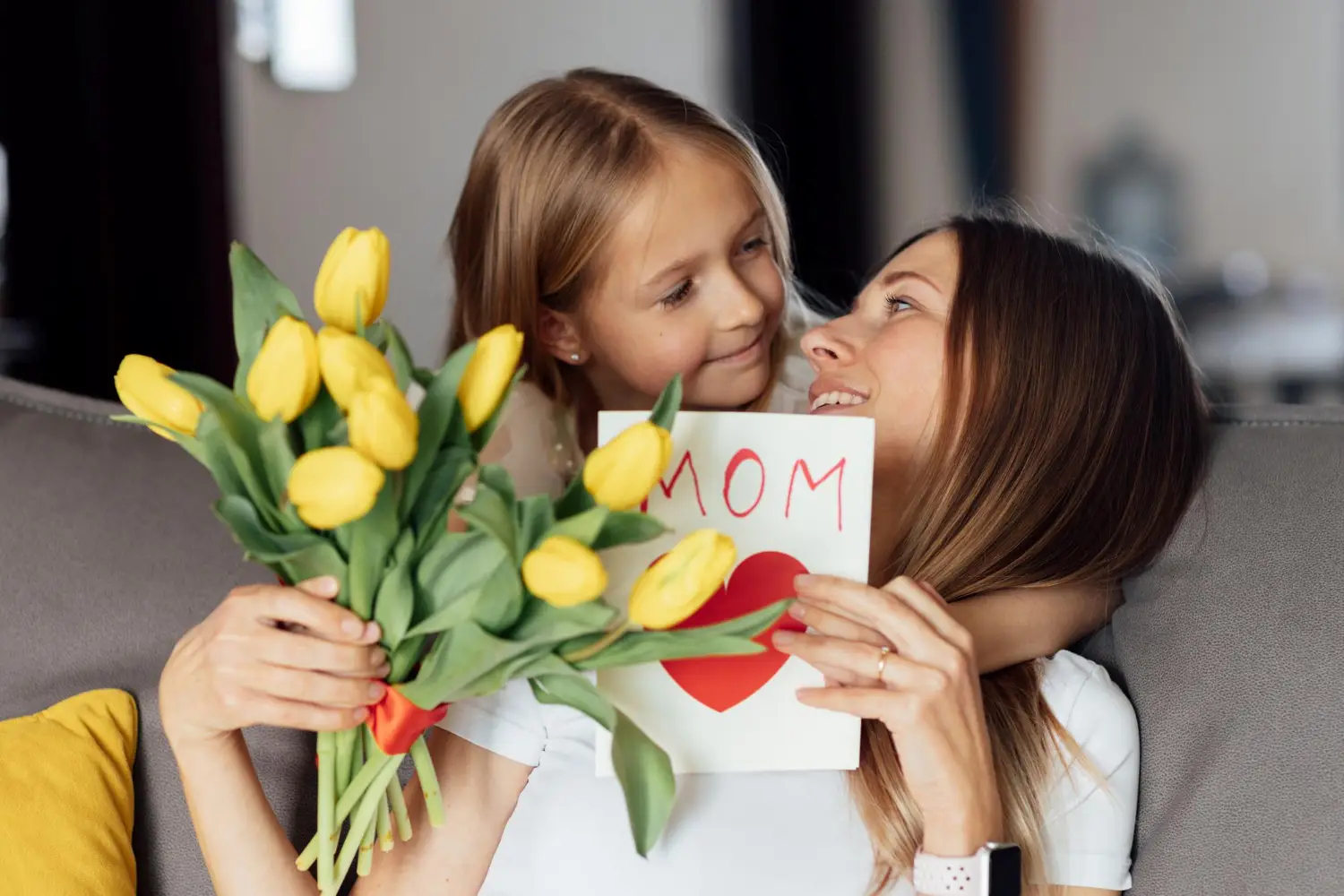
A narrative guide to Muttertag from the perspective of an Icelandic mom learning the rhythms of German culture.
The first time I celebrated Mother’s Day in Germany, I felt something shift. Not the kind of shift you feel when winter finally releases its grip on Berlin, nor the sudden stab of nostalgia when a familiar scent pulls you back across continents. This was gentler, quieter—a shift of temperature rather than terrain.
I’m a mother in my fifties, born and raised in Iceland, where Mother’s Day is loud in the heart even when the celebration is modest. Children pile into bedrooms with tray breakfasts teetering like Viking ships in rough seas. We write poems, we laugh, sometimes we cry. Icelandic affection is not extravagant, but it is freely given.
Germany, I learned, expresses love differently.
Here, Muttertag is a holiday braided with memory, restraint, and a careful choreography of sincerity. And to understand it—as an expat, as a mother, as someone raised in a culture that wears its love outdoors—you have to do more than mark a date on a calendar.
You have to walk through its history.
My first Mother’s Day in Berlin arrived wrapped in May’s pale sunlight, the scent of lilac drifting through our courtyard. My children, trying to adapt to Germany as much as I was, whispered conspiratorially in the kitchen. But something was different here. Quieter.
There were no avalanche-like brunch buffets or frantic flower shortages. Even the advertisements felt subdued, as though the country collectively agreed not to shout about something meant to be intimate.
What I didn’t know then—and would only understand later—is that Germany’s reserved approach is intentional, rooted in a century of complicated history. Where Icelandic Mother’s Day feels like a hug, German Muttertag is closer to a handwritten letter—careful, thoughtful, and purposeful.
And behind every letter there’s a story.
Before I moved here, I never gave much thought to the origins of Mother’s Day. In Iceland, it simply appeared each year like a trustworthy friend. But Germany’s Muttertag carries the weight of a past no family can ignore.
Germany adopted the holiday in 1922, borrowing the idea from the United States. But almost immediately, Muttertag picked up a second purpose: cultural reform.
Church groups, women’s associations, and even the flower industry used the day to promote ideals of family stability. There was already murmuring about the “modern woman,” and not the happy kind. The seeds of idealized motherhood were being planted long before they became weaponized.
By 1933, the holiday was hijacked completely. Declared an official state celebration, Muttertag became a tool for propaganda—the infamous Mutterkreuz, the Mother’s Cross, honoring women for bearing many “racially valuable” children.
It is impossible to overstate how deeply this politicization scarred the German psyche. A holiday that should have belonged to families became a means of state control. After the war, West Germany defused Muttertag deliberately—softening it, privatizing it, stripping it of spectacle.
This is why modern Germans instinctively pull the day inward.
This is why modesty is not just cultural preference—it is historical resistance.
Once I learned that history, everything clicked. I finally understood why German families prefer handmade cards, quiet breakfasts, simple bouquets, and almost ritualistic afternoon gatherings.
It is universal, yes, but in Germany it carries a specific domestic tenderness.
A tray with fresh Brötchen, soft-boiled eggs, jam, a modest flower.
The goal is ease, not extravagance.
In Iceland, we bake all year. In Germany, cake becomes a language of affection.
By mid-afternoon, families gather for Kaffee und Kuchen, one of Germany’s most sacred Sunday traditions. For Muttertag, it becomes the emotional centerpiece—multi-generational, slow, intentional.
The cakes are important:
Erdbeerkuchen in May, when strawberries peak.
Käsekuchen, made with Quark, lighter than anything from Reykjavík.
Bienenstich, my personal favorite, sweet with honey and almonds.
The ritual feels like stepping into the warm spine of German culture.
What struck me most was how little commercial frenzy surrounds the holiday. Iceland has its own brand of simplicity, but German restraint feels different—more philosophical. Love is shown through time, effort, and presence, not price tags.
Handwritten poems from small children remain the country’s gold standard. A walk in a blooming park counts as a celebration. Sometimes, all a mother receives is a quiet house for the morning—and that is enough.
And here’s the thing: once you’ve lived through a German winter, one that reorders your bones and refines your understanding of emotional bandwidth, you begin to appreciate these modest rituals. They’re built for endurance, for meaning, for continuity.
When you grow up in Iceland, affection tends to move like the North Atlantic wind—quick, unfiltered, and unapologetic. Germans, by contrast, prefer a more structured warmth.
I didn’t grasp this until I read Expats Magazine’s piece on How Germans Celebrate Friendship, and suddenly everything about my first Muttertag made sense. German relationships don’t thrive on spontaneity—they thrive on ritual.
Mother’s Day here is part of a constellation of holidays that function as cultural timekeeping. If you understand one, you start unlocking them all.
And if you want to understand how Muttertag fits into Germany’s larger seasonal ecosystem, reading about German Holiday Traditions gives you the full architecture: subtle symbolism, food rituals, remembrance, quiet togetherness.
Perhaps the most poetic detail of German Mother’s Day is its flower tradition.
It is understated, but powerful—a ritual that binds present celebration to ancestral memory. Icelanders honor lineage too, but Germany encodes remembrance into the smallest gestures.
I wore a red carnation my first year.
The second year I wore both colors.
I held them together, like languages, like identities, like continents.
Now, years later, with my children grown and the rhythm of Berlin almost familiar, I’ve learned that Muttertag is not simply another holiday.
It is a cultural mirror reflecting:
If you are new to Germany—if you arrived from somewhere that celebrates motherhood with boldness, or volume, or spectacle—Muttertag may surprise you.
But give it time.
Germany has taught me that love does not need amplification to be profound.
And if you ever feel lost navigating these layers of culture, history, sentiment, and symbolism—remember that Expats Magazine is here to walk each season with you, from holidays to friendships to the subtle art of belonging.
Subscribe to our newsletter for the latest news, exclusive insights.

Find us in social media or contact us through email and we’ll get back to you as soon as possible.


Whether you're moving or settling in Germany, A4ord.de ensures trusted experts are just a click away.


.jpg)