.png)
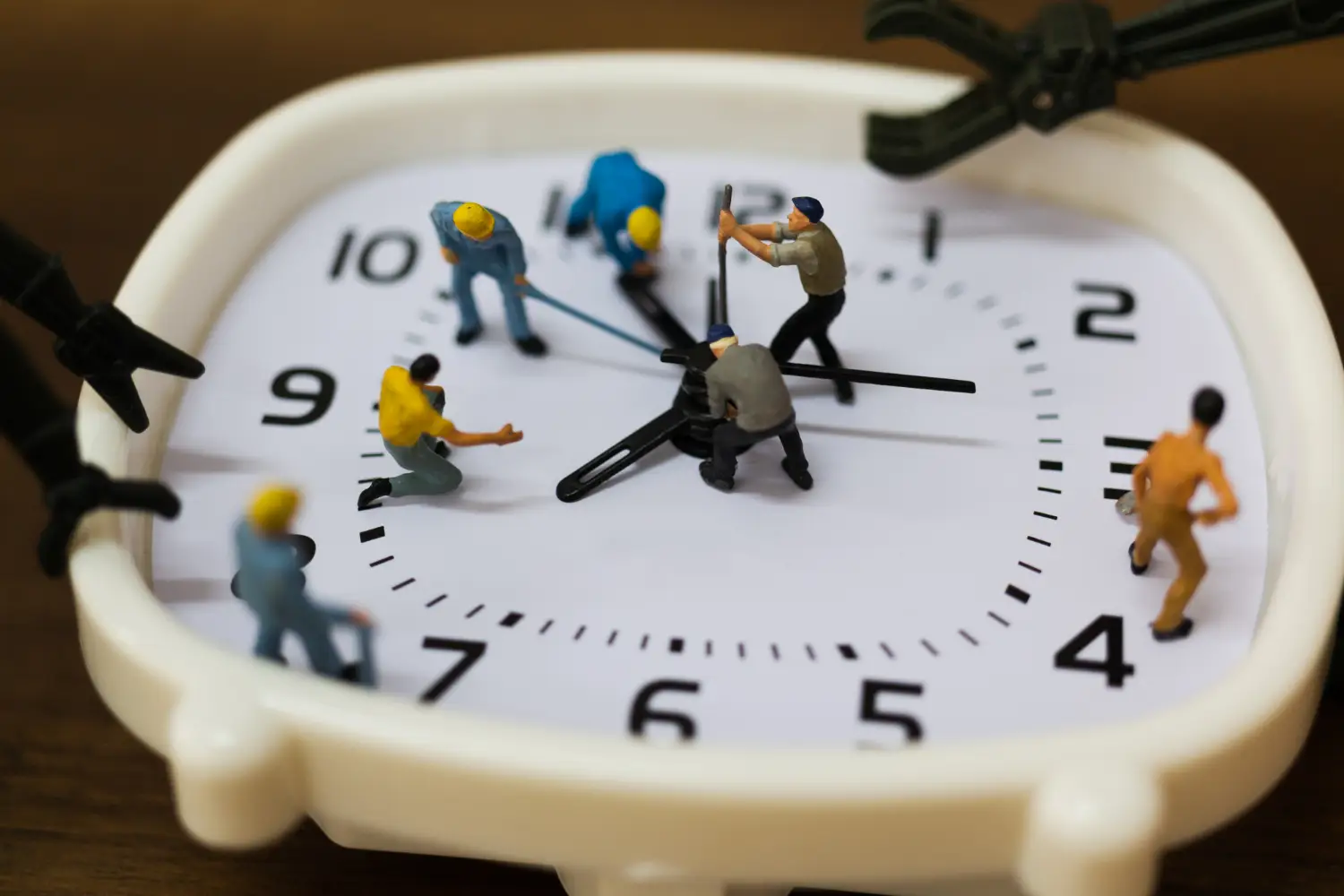
My first spring in Berlin, I learned a brutal truth: Germany doesn’t just do seasons. It does time.
I’m from Colombia, where the clock is a loyal friend. It sits down, stays put, and never tries performance art twice a year. So when Germans told me, casually, that one Sunday night the country would delete an hour, I laughed like they were pitching an avant-garde theatre show at Volksbühne.
Then it happened.
And I spent the next week feeling like my body was running Windows updates in the background.
This guide answers the key question cleanly and then goes deeper: when the clocks change in Germany, the rules that never change (even when politics tries), and the lived experience of the “lost hour” and the “double hour” the first time you go through it.
Germany uses one time zone nationwide. No regional time weirdness. Berlin, Munich, Hamburg, Frankfurt: synced.
Germany’s standard time is:
During daylight saving time, Germany switches to:
The clock change happens twice a year, under Europe-wide rules:
So the simplest answer is: Germany changes clocks late March and late October, every year.
Here are the confirmed dates you’ll care about most (Germany-wide, including Berlin):
In 2027, the clocks will start Daylight Saving Time (DST) and move forward one hour on Sunday, March 28 (02:00 to 03:00), and they will end DST and move back one hour on Sunday, October 31 (03:00 to 02:00). For 2028, DST will begin on Sunday, March 26 (clocks forward) and will end on Sunday, October 29 (clocks back).
This part is where first-timers get emotionally jump-scared.
Germany moves from CET to CEST.
At 02:00, the clock jumps straight to 03:00. That hour does not exist.
What it feels like: you go to bed thinking you have time, and the universe replies, “No. Pay attention.”
Germany moves from CEST back to CET.
At 03:00, the clock goes back to 02:00. The hour from 02:00–03:00 happens twice, which can confuse schedules and tech logs.
What it feels like: your Sunday gets a bonus level. Your body still complains.
More hacks for newbies? Of course, check: Christmas in Berlin
I had just started building routines. Gym days. Grocery rhythm. A little Sunday planning ritual. Berlin had begun to feel less like a puzzle and more like a place.
Then someone said: “This weekend, we change time.”
I asked, “Like… your phone updates?”
They said: “No, the whole country updates.”
The night before, I went out “early” and planned to be home at a reasonable hour. I remember checking the time in a bar and thinking: Perfect. I’ll still get good sleep.
Then I looked again and it was later in a way that didn’t make narrative sense.
Spring forward is not just a technical shift. It’s a social one. The city feels slightly unsteady the next day. People joke about being tired, but you can see it in the body language on U-Bahn platforms: slower blinks, more coffee, less patience.
And if you’re new to Germany, this is the moment you understand a deeper truth: Berlin is built on systems, and time is one of them.
If you’re also learning winter rhythms, the season-change vibe hits even harder. This pairs perfectly with How to Survive Your First Berlin Winter
Germany has been anchored to CET as legal time, with CEST as the legal summer time, supported and distributed by the country’s metrology institute (PTB).
The modern schedule is synchronized across Europe. That sync is the main reason it persists: transport, commerce, broadcasting, everything runs smoother when countries don’t freestyle time.
And yes, people keep debating ending it.
The practice is locally known as die Zeitumstellung (the time adjustment). There’s strong public frustration across Europe, including Germany, and the EU has discussed ending the practice. The European Parliament supported discontinuing the clock changes, but progress stalled because countries can’t agree on a permanent standard and there’s fear of a patchwork of time rules across the single market.
In plain language: everyone agrees it’s annoying, nobody agrees on the replacement, so the switch continues.
That means your planning takeaway is simple: assume Germany keeps changing clocks for the foreseeable future.
More lifesaving articles? Oui, sí, yes. And it’s a VIP: Berlin Winter Fashion and Wardrobe Essentials (2025–2026)
This is where the practical stuff matters. Berlin will not slow down for your circadian confusion.
Here are a few moves that helped me:
If you can, nudge bedtime and wake time by 15–20 minutes for a few days before the March change. The goal isn’t perfection. It’s reducing the shock.
Schedule lighter tasks if you can. If you’re new at work, don’t panic if you feel foggy. Many Germans feel it too.
Flights, international calls, recurring meetings: double check. Europe moves together, but friends outside Europe often do not.
Berlin is a city of rituals. The clock change can be a personal marker: new running route, new Sunday café, new museum habit. If you want gentle Berlin structure, start with Free Museums in Berlin.
(One good habit beats ten ambitious ones that collapse by week two.
Here’s what surprised me most: the time change isn’t only about sleep.
It changes how the city feels.
In spring, evenings stretch. People linger outside. Parks stay active later. You understand why Berlin becomes a different personality in warm months.
In autumn, the early darkness hits like a personality shift. The city gets more inward. More candles, more indoor plans, more layered clothing, more “let’s meet at 19:00” because daylight isn’t participating anymore.
If you’re from a place without time changes, the first year can feel like Berlin is editing your schedule without asking.
But once you’ve lived through a full cycle, it becomes part of your internal Berlin map. You stop being surprised. You start planning around it. You become one of those people who says “clock-change weekend” like it’s a known local phenomenon.
And congratulations: that’s integration.
Want more guides that make Berlin feel readable, navigable, and human? Explore Expats Magazine and build your Berlin year with context and purpose.
Subscribe to our newsletter for the latest news, exclusive insights.

Find us in social media or contact us through email and we’ll get back to you as soon as possible.


Whether you're moving or settling in Germany, A4ord.de ensures trusted experts are just a click away.