.png)
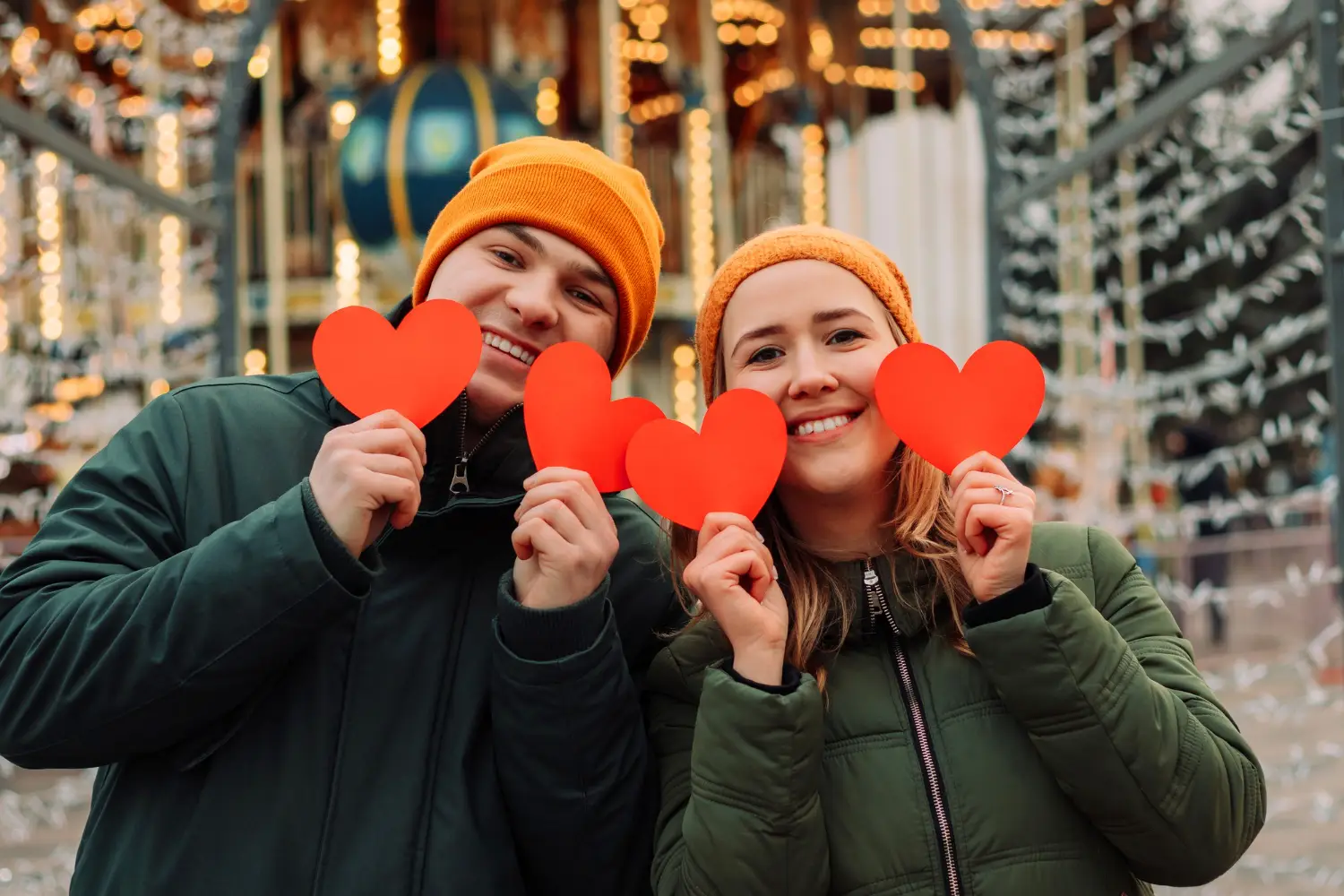
Germany does romance the way it does winter: quietly, deliberately, with an emotional architecture that favors patience over fireworks. Valentinstag here isn’t a pink-saturated spectacle. It’s an intimate negotiation between sincerity and restraint, stitched with symbols that predate the holiday by centuries.
For expats who learned Valentine’s Day through cafeteria cards, heart-shaped glitter, and oversized teddy bears, the German version feels almost like a whispered secret — tender, thoughtful, handmade in spirit.
And like everything else in this country, from Berlin club nights to the rituals that make winter survivable in How to Survive Your First Berlin Winter, the German Valentine has its own internal logic. And we made a guide for that. But first, how did V-Day land in Germany?
Valentine’s Day didn’t grow from German soil. It was reintroduced after WWII through American and British soldiers, and it entered tentatively — a foreign custom, a cultural import.
Germans accepted it politely, the way they accept a seasonal trend, but they stripped it of excess. The holiday’s future depended if it could align with German values: depth, precision, emotional seriousness.
It happened slowly. First through flowers, then through the reserved exchange of cards, then through the gradual acceptance that intimacy can have a date on the calendar. But the skepticism never fully vanished. The joke that Valentinstag is a “flower industry invention” still lingers, part humor, part truth, part cultural guardrail. And yet here we are, decades later, with a fully integrated holiday — but very much on German terms.
One of the first things expats notice is something that feels almost radical: Valentinstag is for couples only. Not families. Not classrooms. Not coworkers. There is no mass gifting. No casual cute gestures to acquaintances. The holiday narrows into a tight, clear frame: two people, one shared narrative.
This shaping of the day reflects a national preference for focused attention. Romance here isn’t democratic — it’s exclusive. The meaning lies in how intentionally one person chooses another, especially in a culture where emotional declarations tend to be measured rather than spontaneous.
The Germans don’t ask, “How many hearts did you give?”
They ask, “How well did you show up for the person who matters?”
Germans are allergic to hollow gestures, and gifting follows this same logic. Flowers matter because they’re sincere, not because they’re extravagant. Chocolate matters because it’s chosen with intention — not because it comes in a heart-shaped box the size of a carry-on suitcase.
A handwritten card often becomes the emotional anchor of the exchange, especially when it includes a well-chosen phrase or a fragment of poetry. Jewelry is exchanged sometimes, but typically in modest, personal forms. Consumables, not trophies, dominate the holiday.
The emphasis, always, is on Zweisamkeit: that sense of devoted togetherness that feels almost sacred in a place where privacy is a national virtue.
And above all, time is the true gift. Breakfast prepared slowly. A homemade dinner. A favorite restaurant booked in advance. The German question is never “How much did it cost?”
It’s “How much did it mean?”
This is where the German Valentine’s story becomes enchantingly local. Romance merges with folklore, and gifts become talismans for the year ahead.
The Glücksschwein — the lucky pig — stands proudly at the center. To outsiders, it looks quirky, almost humorous. But pigs in German symbolism embody prosperity, sensuality, luck, and the earthy abundance of life. On February 14, you’ll find them reclining on chocolate hearts, holding clovers, smiling in marzipan, or perched in tiny ceramic forms. A pig, here, is not a joke. It’s a wish: May this love be fortunate. May it endure.
The supporting cast is unmistakably German.
Four-leaf clovers represent rare luck; red-dotted toadstools echo fairy tales; chimney sweeps symbolize a clearing-away of obstacles; ladybugs carry happiness in miniature.
These aren’t decorative add-ons. They’re cultural artifacts, fusing the new holiday with older traditions — just as Germany blends imported celebrations into its calendar of rituals, the way we explore in St. Martin’s Day in Berlin.
Despite the folkloric layers, Germany retains the classic Valentine’s triad — but interprets each through a cultural lens.
Flowers are non-negotiable. Roses surge in demand, especially deep red ones that fit the holiday’s themes of devotion and seriousness. Alpine bouquets or Edelweiss-inspired arrangements add regional flair, especially in Bavaria or the south.
Lebkuchenherzen, those gingerbread hearts from Oktoberfest, become softer and more romantic on this day. The key? Scale. Small, personalized, iced with meaning rather than spectacle. These hearts are meant to be read close-up, not displayed like carnival props.
Chocolate ties it all together. But again, the emphasis is on quality — Mozart Kugeln, hand-crafted pralines, regional Black Forest confections. Even a small bag of Haribo Sweet Hearts can feel charming when paired with a note that lands emotionally.
Ask Germans about their Valentine plans and the answer is almost always food. Dinner is the centerpiece, whether made at home or enjoyed at a quiet restaurant. The point is not sophistication but intention.
A classic German Valentine’s dinner is hearty and comforting: schnitzel with crisp breading, roasted chicken with red cabbage and apples, or a cheese fondue that pulls you into a shared, almost playful choreography. Dessert is essential. Not optional. The Black Forest Cake stands as the country’s decadent tribute to romance — cherries, chocolate, whipped cream, and the unmistakable whisper of Kirschwasser.
For morning people, almond waffles or hazelnut waffles with fruit cream create a soft, slow beginning to the day.
To love in German is to speak with precision. Language is not casual; it’s calibrated.
“Ich liebe dich” sits high on the emotional ladder. It is profound, committed, and transformative. Germans do not toss it around like confetti.
“Ich habe dich lieb,” on the other hand, glows with affection — warm, intimate, but not yet at the level of lifelong declaration.
Understanding the difference is not only linguistic but cultural. It signals your fluency in emotional etiquette.
Then come the everyday endearments — Mein Schatz, Mein Liebling, Mein Engel, the famously sweet Hasi — each chosen with its own emotional temperature. And the Valentine-specific phrases, simple but loaded with sincerity, anchor the day.
Mein Schatz
Literally “my treasure.”
Culturally: the most common German term of endearment. Gender-neutral. Warm. Deeply affectionate. Safe for serious relationships, long-term partners, and everyday intimacy.
Mein Liebling
Literally “my darling” or “my favorite.”
Tone: soft, classic, tender. A bit more romantic than Schatz, but still widely used in both long-term and early-stage relationships.
Mein Engel
Literally “my angel.”
Tone: gentle, protective, sweet. Used when someone feels cherished or supported. Think: “you matter to me, and I want you safe.”
Hasi
Literally from “Hase” (bunny).
Tone: playful, cute, slightly cheeky. Often used in affectionate, fun relationships. Not formal at all — it’s the cozy Sunday-morning nickname, not the dinner-party introduction.
Pro tip: A handwritten note with a single line of German poetry can turn a simple gesture into something lasting.
To honor Valentine’s Day like a local, you don’t need spectacle. You need clarity. Devotion. Intentionality. You need to choose depth over display.
You set the table.
You light the candle.
You write the card.
You choose the words precisely because you mean them.
German romance is built on foundations rather than fireworks. It doesn’t ask for performance. It asks for presence.
The rituals, the seasons, the unexpected traditions that define life here — Expats Magazine is your home base. We bring you the stories, the histories, and the insider context that help you live not just in Germany, but with Germany.
Keep exploring. Keep learning. Keep reading Expats Magazine — where culture meets clarity, and every expat finds their place.
Subscribe to our newsletter for the latest news, exclusive insights.

Find us in social media or contact us through email and we’ll get back to you as soon as possible.


Whether you're moving or settling in Germany, A4ord.de ensures trusted experts are just a click away.



.jpg)